
Artificial Intelligence (AI) is reshaping health research and practice — from early disease detection and diagnosis to personalised care, risk prediction, and large-scale community data analysis. Yet, as these technologies accelerate, they bring complex ethical challenges: data privacy, patient safety, algorithmic bias, transparency, equitable access, and even the risk of digital colonialism.
About the Workshop
This interactive workshop brings together regional experts, policymakers, and researchers to co-develop a framework for ethical digitalisation of health information systems in Asia-Pacific economies — adaptable to diverse contexts worldwide.
Participants will explore how to:
- Ensure ethical governance in AI-driven health systems
- Strengthen data equity and inclusiveness across fragmented systems
- Learn from global experiences to avoid repeating digital missteps
- Identify best practices and safeguards for responsible AI in health research
Through expert presentations and roundtable discussions, we’ll leverage the interdisciplinary and cross-cultural strengths of the APRU network to shape a regional consensus statement on the ethical use of AI in health.
Why Join
- Gain insights from global thought leaders in AI ethics and digital governance
- Contribute to the development of actionable policy frameworks for the region
- Network with professionals shaping the future of ethical digital health
- Be part of a movement toward responsible, inclusive, and equitable AI in health systems
Featured Speakers

Dr Mellisa Withers
Program Director of Global Health Program
A Professor and Director of Pedagogical Enrichment and Training in the Department of Population and Public Health Sciences at the University of Southern California’s Keck School of Medicine, and the Director of the APRU Global Health Program. Her work focuses on global health, women’s empowerment, migrant and mental health, and community-based research. With a PhD in Community Health Sciences from UCLA, she brings rich international experience, having lived and conducted research across several countries, and continues to inspire through her global perspective and passion for cultural understanding.
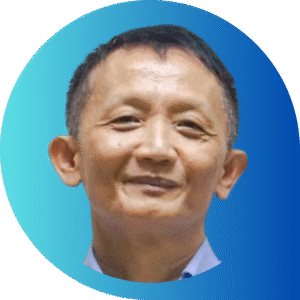
Dr Peter Sy
Assistant Vice President for Digital Transformation, University of the Philippines
A leading philosopher and ethicist, Dr Sy advises the Philippine Departments of Health and Science & Technology on eHealth privacy and governance. His expertise spans AI ethics, research ethics, and open data, and he co-founded the UP Social Innovations Lab.

Dr Hannah Yee-Fen Lim
Associate Professor, Nanyang Technological University (NTU), Singapore
A world-renowned authority in AI and law, Dr Lim has advised the World Health Organisation and led multimillion-dollar research on AI governance, digital ethics, and data law. Her groundbreaking work has influenced global frameworks for AI in healthcare and smart cities.

Dr Vivek Jason Jayaraj
Deputy Director (Analytics & Informatics), Digital Health Division, Ministry of Health Malaysia
A public health physician and data scientist, Dr Jayaraj drives Malaysia’s digital health strategy. His work in predictive analytics, COVID-19 forecasting, and precision health reflects a vision of data-driven public health with empathy and impact.

Dr Cormekki Whitley
Chief Operating Officer, Data.org, USA
Bringing nearly 30 years of experience in nonprofit leadership. She oversees the organisation’s operations, finance, HR, and programme implementation, while leading financial inclusion capacity-building initiatives across the United States and Asia Pacific. Previously, she served as Interim Executive Director and COO at the Centre for Law and Social Policy (CLASP), where she secured major funding, strengthened operations, and advanced high-impact initiatives. Her expertise spans financial management, organisational development, fundraising, and change management.
Passionate about equity and inclusion, Cormekki also contributes her skills as a board and committee member for organisations such as Volunteers of America and Code for Science & Society. She holds a degree in accounting from NC State University and advanced degrees from Meredith College and Northcentral University.

Christina Schönleber
Chief Strategy Officer at APRU
She is responsible for the direction of APRU’s strategic priority of informing policy development on solutions to Asia Pacific challenges and the development of APRU’s research-related program areas. As Head of Knowledge Exchange at the Royal College of Art in London, she developed and implemented the RCA’s strategy for Knowledge Exchange and set up key industrial and third-party collaborations with major international corporations such as Tata Consultancy Services and Visa Europe. As Assistant Director of the University of Kent’s Innovation and Enterprise Department, Christina led the University’s Knowledge Exchange development in key areas related to science and social science.
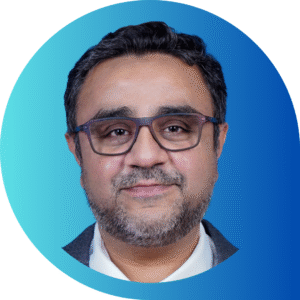
Dr Sanjay Rampal Lekhraj Rampal
Executive Director of Research Development, Universiti Malaya, Malaysia
He is a Professor of Epidemiology and Public Health Physician. He also heads the Western Pacific Regional Training Centre, which is supported by the Special Programme for Research and Training in Tropical Diseases (TDR). Medically trained in India, he served in Malaysia’s Ministry of Health before earning a Master of Public Health from Harvard University and a PhD from Johns Hopkins University. He is Certified in Public Health (CPH) by the US National Board of Public Health Examiners. Dr Rampal aims to drive transformative growth in research and education within public health. He seeks to improve the nation’s health by focusing on the prevention of cardiovascular and metabolic diseases, as well as their intersection with cancer and certain communicable diseases. Dr Rampal is dedicated to advancing public health through excellence in research, education, and collaborative leadership.

Dr Eleni Dimokidis
Head of Healthcare Technology for Asia Pacific and Japan, Amazon Web Services (AWS)
She drives healthcare technology innovation and nationwide digital transformation in collaboration with Ministries of Health and governments. With multidisciplinary expertise spanning technology, law, and life sciences, she holds a PhD in Regenerative Medicine and multiple advanced degrees in Bioengineering, Nanotechnology, Law, and Computer Science. Her work covers key areas including digital health, AI, genomics, telemedicine, and bioinformatics, advancing AWS’s mission to strengthen healthcare systems and improve patient outcomes across the region.

Dr Jonathan Guillemot
Universidad San Francisco de Quito
He is the Director of the Institute of Social Medicine and Global Challenges, Universidad San Francisco de Quito. Jonathan R. Guillemot holds a PhD in Global Health, Social Medicine, and Gerontology from King’s College London (United Kingdom). Beginning his academic journey with undergraduate and graduate degrees in Political Sociology at the Université de Lille (France), he worked as an analyst in Health Economics in London (United Kingdom) for close to a decade before joining Universidad San Francisco de Quito. Currently, he serves as the Associate Dean of the School of Medicine, where he is also the Director of the Institute of Social Medicine & Global Challenges and a full-time associate professor. His teaching portfolio includes subjects such as Ageing and Later Life, Sociology of Health, and Clinical Ethics. Dr Guillemot engages in research and community outreach projects in the areas of Gerontology and Research Pedagogy, integrating initiatives such as One Health.
Domains and Discussion Points
Programme
0900 – 1000 hrs
Registration
1000 – 1015 hrs
Welcome & Introductions (Christina Schönleber, APRU)
1015 – 1040 hrs
Plenary 1 – Peter Sy (University of the Philippines)
1040 – 1105 hrs
Plenary 2 – Hannah Yee-Fen Lim (Nanyang Technological University, Singapore)
1105 – 1130 hrs
Plenary 3 – Vivek Jason Jayaraj (Ministry of Health, Malaysia)
1130 – 1215 hrs
Cross-stakeholder Panel Discussion
Speakers: Cormekki Whitley (Data.org) & Eleni Dimokidis (AWS)
Moderator: Sanjay Rampal (Universiti Malaya, Malaysia)
1215 – 1245 hrs
Round-table Briefing and Group Assignment
1245 – 1345 hrs
Lunch
1345 – 1530 hrs
Round-table Discussions
1530 – 1615 hrs
Plenary Report back & Live Editing of Consensus Draft
1615 – 1630 hrs
Closing Remarks and Next Steps
Towards an Ethical Digital Future
Join us in shaping a regional vision where AI innovation serves equity, ethics, and human wellbeing. Together, we can build trust in digital health and ensure that technological progress benefits all communities — not just a privileged few.